
Inverter
45 kW Inverter Capacity
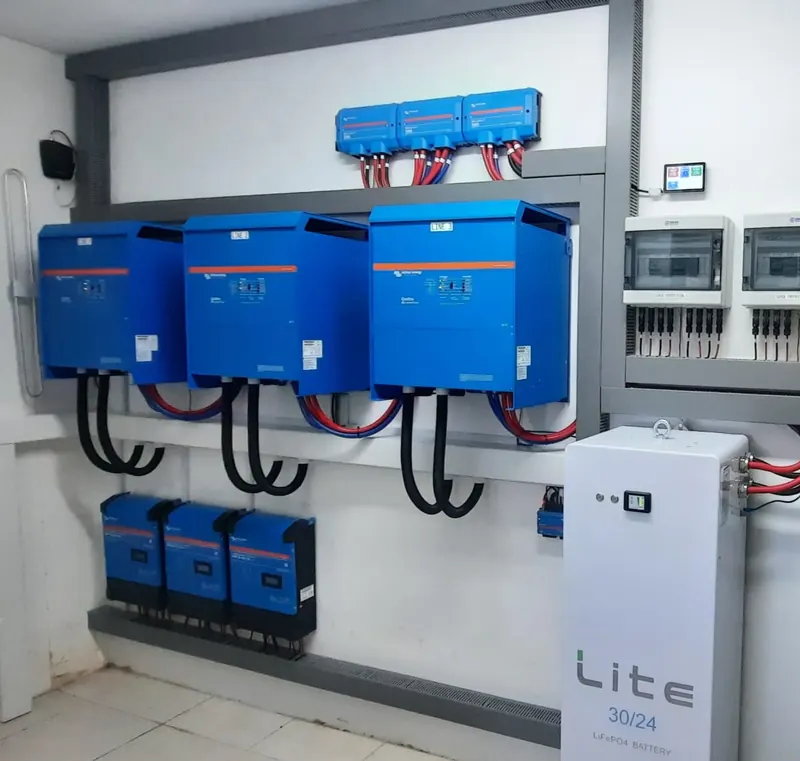
- Three Victron Quattro inverters, one per phase
- Sized to the factory's electrical demand
- Runs production machinery during grid failures
Project · commercial solar · Plettenberg Bay
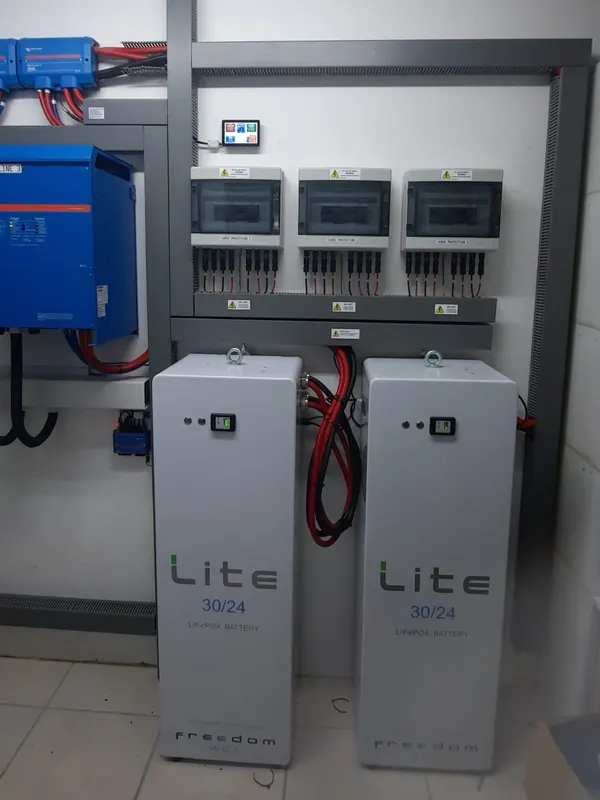
Three Victron Quattro inverters (45 kW combined), 60 kWh of lithium battery storage and a 30 kWp rooftop solar system keep one of the area's largest window and door manufacturers in production when the grid fails, and have cut its electricity bill by about half.
One of the largest window and door manufacturers in the Plettenberg Bay area came to All Electrical Contractors with a serious problem.
At the time, South Africa was going through frequent load shedding, with power cuts lasting up to four hours at a time. For a busy manufacturing plant, every outage meant lost production time, lower productivity and significant financial losses.
The brief was simple: the factory had to keep running at full capacity, whatever happened to the municipal electricity supply.
AEC designed and installed a commercial solar and battery backup system around the factory's energy demand, built into its existing electrical installation so the plant runs normally through grid failures.
Inverter
Storage
Generation
Integration
The system does more than keep the lights on. It now supplies about half the factory's electricity, every day, not just during grid failures.
When the municipal supply fails, production carries on without interruption.
What began as an answer to load shedding has become a long-term investment in energy independence and lower operating costs. By combining solar generation, battery storage and intelligent energy management, AEC helped the business reach three goals:
What this project shows about solar and battery backup for businesses.
Yes. A commercial hybrid system with enough inverter capacity and battery storage switches the factory to battery and solar power when the grid fails. In this Plettenberg Bay installation, three Victron Quattro inverters (45 kW combined) with 60 kWh of lithium batteries keep production running during grid failures.
It depends on the site's electrical demand, the battery capacity and the available sunlight. This factory's 60 kWh battery and 30 kWp solar system keep operations running for about 4 to 8 hours without grid power.
It depends on the system size and how much of the business's demand falls in daylight hours. This Plettenberg Bay factory now generates about 50% of its electricity from solar, which has cut its electricity bill by about 50%.
Tell AEC about your site. Have your last three months of electricity bills handy, and AEC will size a system around your demand.
Monday–Friday8am–5pm
Saturday–SundayBy appointment
Your enquiry is emailed straight to AEC. Attach your electricity bills or photos of your site below if it helps. Prefer to talk? Call 060 367 3774.